We are the world

June 21st, 2010

Once every four years we remember what it is about other countries we so enjoy: beating them at something. People with no normally-visible national spirit suddenly wear flags and stay up all night hoping for the downfall of nations they know so very little about. Countries are categorized swiftly, and on the smallest of things, using words like “rubbish” and “gritty” that are either awkward or insightful. This is the World Cup, and it’s a wonderful time.

At seven am on a Saturday there is a man running the streets of North Beach. He is clad primarily in the English flag, St. George’s Cross, and a hat of the same colors. He leaps and yells, sprints and screams, and pauses occasionally to say “Hello” to passing strangers. He poses for pictures, or at least pretends to, before dashing away. He is mad, or happy, or madly happy, and he elevates the entire neighborhood. It is seven am on a Saturday morning, and they were sleeping. The England v. USA game begins, in this time zone, at eleven, by which time he will be sweaty and flushed, and ready for the throng that greets his triumphant entrance into the pub.

“That’s not a flag he’s wearing, it’s a proper cape!” says one of the onlookers, having caught quite a glimpse on the sidewalk. Indeed it is a cape, perhaps custom-made, and the construction earns him street cred from those wearing store-bought jerseys.

Inside the bar, waiting for pints and waiting for the match, their jerseys do draw comment, a display of camaraderie and knowledge.

“Altidore, nice,” we say on seeing Jozy’s 17, or “Dempsey, looking for a goal from him today.” The US white jersey dominates, this being San Francisco and the US blue featuring a hideous bandolier-style white diagonal. The English supporters wear hats and homemade gear, though Rooney’s top-selling shirt floats around, worn by men who will be strangely quiet once the game begins. Yet in some way they will win this meeting, their language and descriptions dominating, their accents percolating through announcers to the mouths of the American fans. In the United States football may be the rest of the world’s sport, a minor thing, but the language of football is not global, it is English, in the same sense of the word as the man’s cape as he streaks by the window shouting unintelligible enthusiasm.

This is a funny time to be American, to be at home in America, for the oft-repeated notion that “Americans are starting to pay attention to football.” By “this is a funny time” I mean not this month bridging June and July in the northern hemisphere’s summer, but the World Cup. Similar statements were made in 2006, in 2002, in 1998, and in 1994, which is as far back as my memories stretch with accuracy. It is World Cup season, and we Americans are suddenly awake to the globe’s furor.

Yet we are not. In Berlin a friend tells me how as he sat watching the game last Saturday in an outdoor cafe every passer-by would stop to check the score, to ask who’d scored, or to comment on the quality of play. Grandparents, children, women with babies, people on bicycles, young friends, all wanted to know what was happening at that moment in South Africa where Australia was playing Ghana.

“It’s amazing,” he says, of being in Europe for the World Cup, “everyone cares.”

In Japan in 2002 I lived less than five miles from the stadium in Saitama, and remember most the feeling of being *there*. Matches were not just things to watch, but events, and the easiest way to understand was to go outside, to find a huge display, to find a crowd of cheering supporters. The streets of Tokyo were filled with crowds of cheering people sporting colors of nations they may or may not have been born in, a rare combination of accepted nationalism that fit so perfectly into the first dual-hosted World Cup.

Four years later, awake at odd hours to watch matches in Germany, a friend and I lamented our lack of foresight in being so distant. We should move every four years, even if only for the summer. It was absurd talk and a wonderful notion, forgotten in our planning after the tournament’s end.

Yet here we are, four years later, amid the greatest sporting event on the planet, he in Germany and I in San Francisco, only one of us in the proper time zone and neither of us in the correct country. With internet broadcasting, with bars that open early and fans that flash their colors regardless of their current city, we can still be caught up though, and run the streets in our flag. The crazed energy that comes from being on the streets outside the stadium, let alone at the matches themselves, can remain a goal for the future, about four years from now.

Another winter

January 22nd, 2010

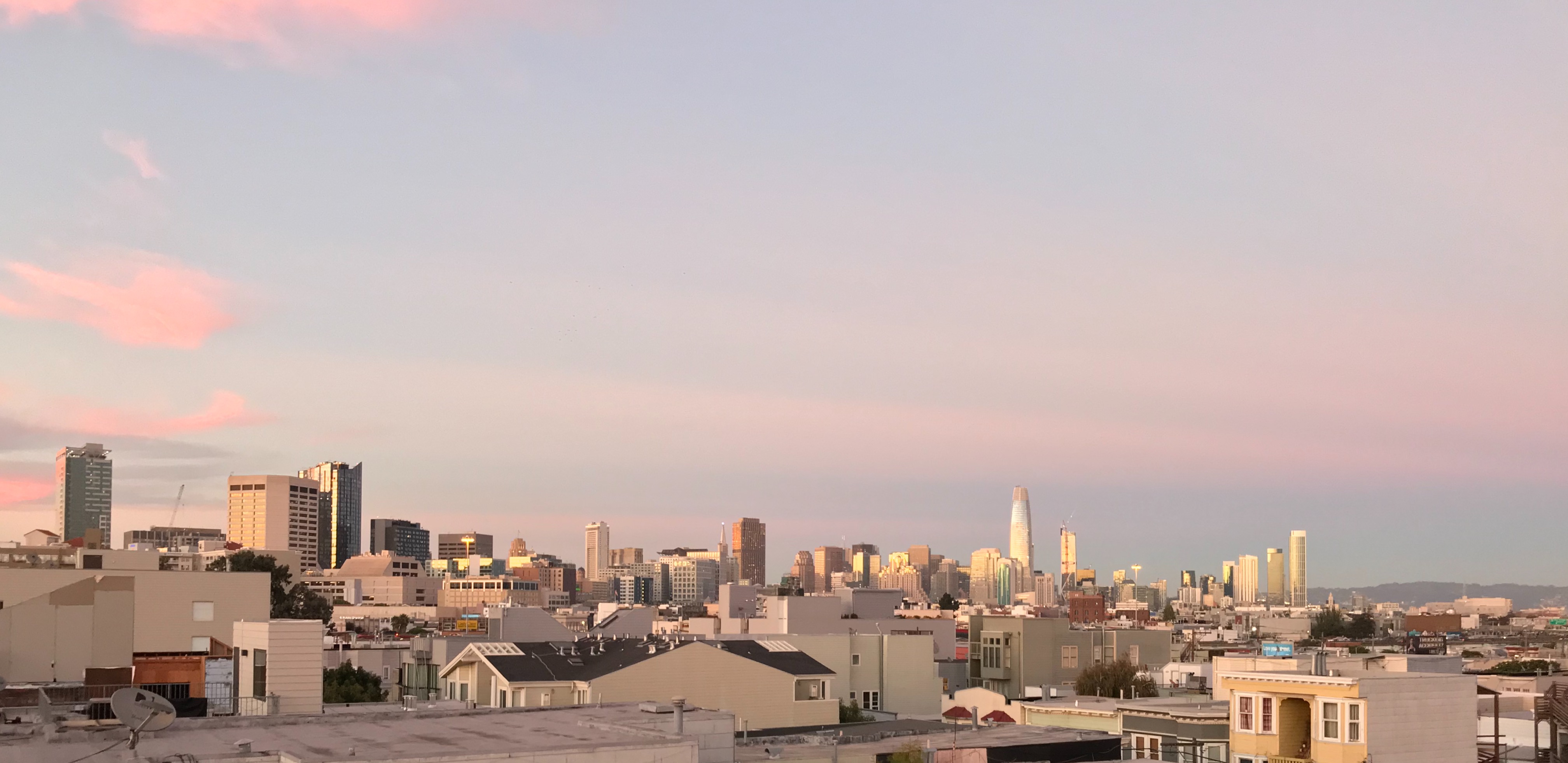
In San Francisco, it rains. His friends are happy, are ill, are new to town, exuberant, exhausted, and at work. They buy bicycles, have lunches, look for work, travel, drink, play ultimate, talk, speculate and hope. To see each other they take the cable car, in the rain. They wait for busses together, and trains, they bicycle and walk. Very rarely, they drive.

It is two thousand ten, and the car seems inconvenient, expensive, restrictive. Parking is costly and traffic bad, especially in the rain. Yet in the rain they value the car too. After ultimate they are glad of its four wheels four doors and an engine that makes heat. Buying bicycles and furniture they are glad of its trunk. Commuting in it they are glad of the ability to take jobs where public transit does not run, and yet distraught at the hours spent to do so.

In the first month of what might be a new decade his friends also plan, and hold meetings. They direct, act, celebrate and rehearse. He attends, happy to be again in the dark of a theater, in the shelter of strange buildings in SoMa or the Tenderloin.

On public holidays they walk together to the ocean and watch dogs run in the chill water of the Pacific. They watch a lone kite surfer, bold, skim the chop at ridiculous speed. And then they walk home, in the rain, wet and content, to do laundry and clean.

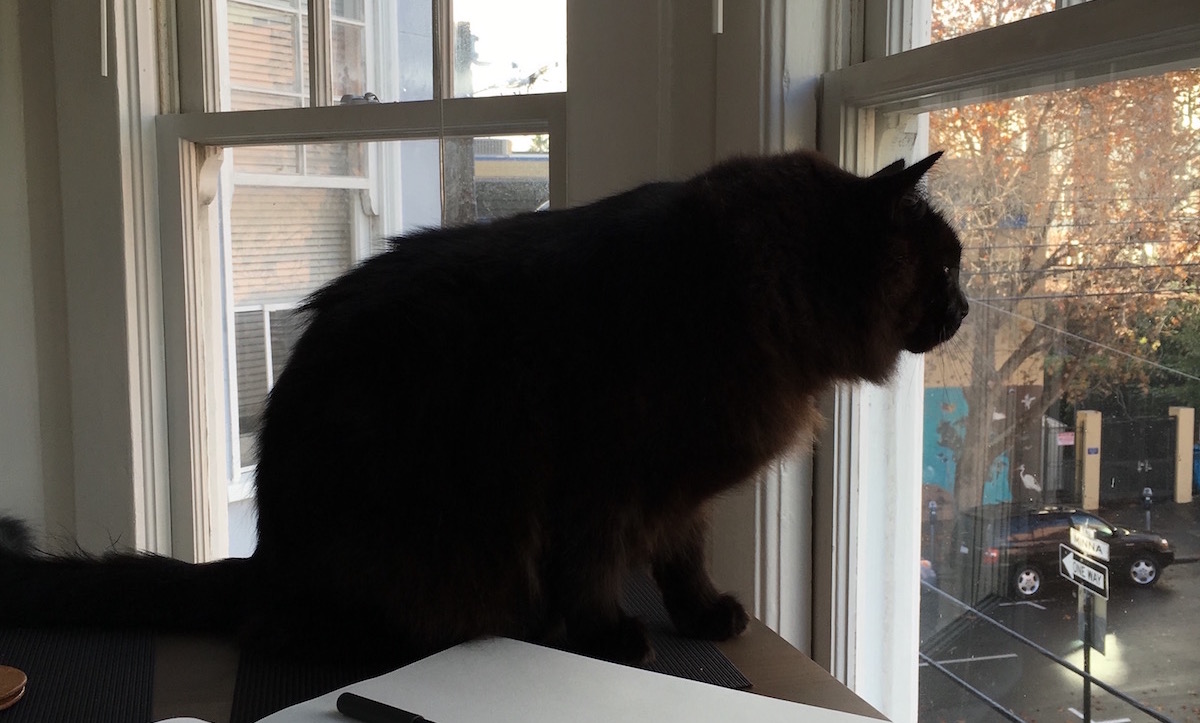
It is January 2010, and in his country politics are a disaster and the news often sad. He thinks briefly of leaving, as he did in 2000, in 2004. His friends are here though, doing so much in to San Francisco, and he resolves to stay, to learn, and to enjoy. New places beckon, both across the street and around the globe, but he is not leaving. Not yet. Instead he builds a new desk, places it at the window, and watches the weather.

In San Francisco, in January, it rains.

Irving in the dark

October 5th, 2009

Tonight I am biking home from the video store, where I wheeled my Haro in and stuck Appleseed in the DVD return and wheeled out again, gliding down the sidewalk in the nine pm dark. Black hoodie no lights and a grin I crest one of the rises, happy to be back. They aren’t hills, I live out where it’s flat, where from the roof the sun sets on the Pacific, and where the wind from Asia shakes the trees. Tonight I am coasting down a sidewalk, silent, and the man walking out of the gym, shorts and sweat-wicking top, never sees me, his headphones in and head covered in sweat. I see him and dance past, my BMX nimble, its tires freshly inflated. Down the slope I go, past Roaring Mouse Cycles, who will swap out my brake cables on Tuesday next, something I’d thought about doing in Houston. But boxing and shipping and storing were in our future, this bike’s and mine, and those leave a lot of dirt on the chain, on everything, that needs cleaning and straightening.

Tonight we are done with that, this bicycle and me. Bought in Los Angeles while I was living in China I think it is glad, after our year’s sojourn in Houston, to be back in California, within reach of the Pacific. So am I, glad to be slipping down Iriving amidst the cars and fixies, late night diners and homeless men who accost me, “hey you on the bike!”

This little trip to the movie store is one of our first jaunts, just a quick spin up to 9th and Le Video, home to the greatest selection in the city, or so I was told. Our neighborhood seems to hold the kind of balance I have been seeking, it feels like, for years. Tonight though I am going for speed, for the thrill of no hands in the dark, and the strange acclimatizing that happens on returning to a BMX after a summer of riding full-size mountain bikes around Colorado.

Yesterday I watched the neighborhood while we wandered, the sounds of Hardly Strictly Bluegrass resounding over the trees.

“There’s a good balance here,” I said, “a few Vietnamese restaurants, a few Thai, a donut shop, all filled with people who speak Chinese.”

“I know,” she said, “it’s like being in Asia again.”

“But it’s got what I always wanted,” I said, my point coming together slowly.

“A donut shop?” She wasn’t far wrong.

“Yes, and a pizza place, and a bar that shows sports and serves tacos and is full of people I can talk to.”

“A mixture of Asia and the parts you like of New York,” she said, “in a neighborhood near the Pacific, and the park.”

“It’s small enough for me to know and foreign enough for me to feel alone,” I didn’t say, but have thought all day.

Tonight I know it’s all these things as I unlock the gate with my bicycle in one hand, and walk in to our courtyard quiet and warm. Half of the apartments are lit and the wind, which howls in from the ocean and down the streets, is held back by their walls. Chelsie the cat is no where in sight, but I know she’ll come visit when the afternoon sun pours in our windows. Her owner often wanders up, after an hour or two, to look for her through our open door. He’s content to have her wander the building, and we likewise, another part of the neighborhood not our own but familiar, and becoming home.

Summer ’99

March 26th, 2009

In my memory Ocean City is a pretty lonely place.  Even though I was living with a friend, sharing a house with four other people, and working with a dozen more, the sharpest parts of that summer are ones I spent alone.  This is true of anywhere, and why solo travel is more revealing than group tourism.  Ocean City wasn’t either of those, though.  It was a place to live for a summer that fit all of my requirements and fell into my lap.  A house, they claimed, for little enough, a few blocks from the beach and the lively boardwalk that meant jobs aplenty.  I can still feel the house, that amazing blend of wood and carpet, sand and dust that comes from being near the ocean and open to the weather.  Some houses, too often boarded up against storms or families returning to their northern homes, claimed a different odor, that of disuse and neglect, of age and mildew, with the ocean’s presence as an afterthought, something to be sought out beyond the walls.  Not ours.  On Sparrow Lane, a little two-block curve of road between Bayshore and Robin, both of which ran along the inlet, it was a place that seemed to have no windows or doors, the air constantly suggesting the weather outside.  We added to this with our plethora of fans, seemingly the only furniture college students in the north east ever really own.

Ocean City, on a map, resembles nothing so much as an accident, a mistakenly placed label over a long sliver of land separated from the coast of Maryland and Delaware.  For most of it’s length the city manages no more than four blocks of width, from bay to ocean.  Save for odd protuberances, small peninsulas on the bay-ward side like the one formed by Bayshore and Robin, which stretch west an incredible additional four blocks from Ocean Highway, which, running north to south is two blocks from the boardwalk and, usually, equidistant from the bay.  Like most accidents, Ocean City has the feel of a place clinging to its name, and to life, with the manic rush of a really good party.  It is a vacation town, an east coast boardwalk town, and a college one at that.  Our house, filled with five mostly-impoverished students on break and holding down whatever jobs available, was by no means unique.  The houses on either side were similar, and the trash in the big plastic blue can that sat by the telephone pole demonstrated a diet of Bud Lite and pizza delivery.  A lot of OC survived on late-night pizza, which was good, because two of my roommates made it, often coming home at one or two with a pie they’d prepped for our house while they closed down the kitchen.  I don’t know what it’s like now, that house, with it’s two-storey living room, the stairway winding up one side to a balcony, but if it’s just the same I wouldn’t be surprised, empty in the winter, housing another bunch of hopeful and hopeless students for the summer.

This college vacation town didn’t seem lonely.  With groups of people on each porch, with games of drunken whiffle ball in the street, it had the constant late-night ruckus of a town built on the service industry, where no one got off work until ten o’clock.  It was a place where a night out started when a friend who’s bouncing got on shift at a club, where activities on off-days consisted of going to visit the roommate that worked at the mini-golf range and playing a few rounds gratis.  No, on the surface, or when somebody’s folks came to visit, it didn’t seem lonely at all, always bustling with people, always somebody on their day off going to the beach.  But under that busy summer feel there was a sense of just how empty this place would be, in a few months, and just how little any of the people who had rolled up for the summer with their beach chairs and their shades on really cared.

I used to get up early, around five, to work the breakfast shift, a pretty good job, around fifty dollars for the morning if the place was busy.  Funny to say, since I’d walked into the house at the last minute, the final roommate and the last person to arrive, but I had the best job of the house, which wasn’t as good as it sounds.  I worked at a surf n’ turf place, right on the boardwalk.  Attached to a hotel, and with a pool bar, we only did breakfast and dinner, which was a great gig, and the hotel meant plenty of people, even when the weather sucked and no one wanted to wander the boardwalk before dinner.  When I woke my roommates would be sprawled out from the night, having come home at two with a pie and a sixer and gotten loud right around when I needed to get to bed, which didn’t bother me.  At nineteen going on twenty I’d gone sober for the summer, and was up and unlocking my bike from the porch before the sun.  Looking back those rides are a lot of why Ocean City seems so quiet, so lonely.  Sure someone might be passed out on the lawn next door, but more often the road was empty, the city asleep, and the sun just beginning to climb.  I’d bike down Robin to Bayshore, a couple of blocks, across the highway and out to the boardwalk.  The buildings, mostly one or two storey, were all shuttered, locked and graffitied, concrete shops that in the evening would have tables out slinging barbecue or ice cream, with flocks of people eating, chatting, and roaring off again down the highway.  Two blocks of old wooden beach-side residential, looking the way rental houses look after fifty years of weather and wear, and then two more of modern brick and concrete squares designed to sell something cheap to a whole bunch of people who’d never be back.  Without the crowds, as the sun broke over the horizon, it wasn’t an inviting sight.  I’d always remember my head waitress’s words then, crossing the empty four lanes of the highway on my mountain bike.  “In the winter,” she’d say, when we’d talk about how busy the boardwalk seemed, standing outside the restaurant just before opening in the evening, “you can walk the length of Ocean Highway and not see a single car.”  At five am it felt like I could do the same, as though the season had changed while I slept.

Then I’d get to the boardwalk, sharing it for ten blocks with the other bikers and joggers, mostly old folk up to see the sunrise on vacation.  I wondered if they knew about the ruckus that went on, a few blocks behind their ocean-view rooms, until just about dawn every night.  I wondered if they realized that the people living on food taken from the shop in which they worked, who washed with towels they stole from their hotel jobs, were just a block or two behind them, passed out on the lawn, having spent their marginal wages on the cheapest beer they could find within walking distance.  And then I’d glide down the boardwalk, riding with no hands, and I’d watch the sunrise over the Atlantic, which, for all the Pacific says they’ve got, is a beautiful sight worth waking up for.  The sun came up on that city like a curtain of orange and then pink and then yellow and then white, pulled up over this pale light blue wash that covered the sky.  Everyone on the boardwalk, all hundred of us or so, spread out over the fifty blocks, would turn and watch, just stand real still in our own little worlds of amazement.  And when it got to a certain height we’d all turn back to our jog or our hotel room, and I’d pull that swinging screen door open and head into the darkened kitchen.

Squirrel tricks

October 8th, 2008

There are two important parts of a home.  Having one, and what’s outside of it.  The saddest part of leaving Tokyo was not the actual leaving, but abandoning that home.  Knowing that the next time I landed in Narita two hours of train would not bring me to my doorstep makes me want to move back even now, five long years gone.  The loss of a home means not being able to welcome people to a foreign country, to an environment they know nothing about.  Finding friends at the train station, mouths agape, and leading them through winding streets to a balcony all our own is a joy that leaves uneasily.

In Shanghai these past years we welcomed guests through from all parts of the globe, travelers and those seeking homes of their own.  Some for weeks, some for scant hours until their flight out or train inwards. Simply having a space, being able to offer shelter and retreat to those far from theirs, rewards each month’s rent.  Feeling comfortable in a foreign place, be it Manhattan or Los Angeles, because someone has a place we can return to, has value without equal.

Yet it is the second aspect that draws me forward, into new cities and out of old comforts.  Sitting now facing down Rice’s manicured lawns, watching the trees sway outstretched in the sun, I am glad again of that pull.  Ensconced again in a city I was not born to the greatest gift is in each morning’s presentation of the world outside: the squirrel highway that runs past my window.  Gifts like these drive my apartment hunting mind.  Interior quality is of course preferred, but the essentials lie in window light, in vantage point, in relative location.

Like with all things, luck is of the greatest assistance.  A friend whose landlord owns another place, a relative who owns a building, a teammate’s relocation, these coincidences cannot be paid for, nor planned.  Still, their results can be evaluated by these same desires; like all homes they compete primarily on what can I walk to, what can I see.  These questions applied to the Saitama apartment of years before give out answers that reinforce my desire to return: an express stop on the Saikyo line and Mt. Fuji.  Those two things, one walkable, one seen, coupled with the ability to grant others a base from which to visit Japan, outweighed all negatives of expense and space.  In Shanghai other calculations won, usually the desire for an easy walk to anywhere overcoming view.  Too often in cities location becomes the dominant demand, the singular benefit of housing.  Too rarely does the view reward.  The squirrel highway does, with its multiple levels and fast-paced travelers.

On the second floor in a residential neighborhood, an apartment-wide swath of windows gives me panoramic views.  They are, for the most part, of trees and houses with limited sky.  I am sure they have not, despite their excellent light, entertained previous residents so much.  The property line, just behind my apartment, is demarcated by a wooden fence, some four meters tall, topped with a flat rail.  Another meter above it and parallel runs the phone line, thick tubed and taunt.  Slightly above that runs the power and cable, a weave of thinner wire and rubber that only the truly harried consider.  The top of the fence sits just above the baseline of my windows, the highest wires just below their top.  When traffic is heavy, lane changes are frequent, with those following the phone cabling often dropping down to the fence before continuing.  This highway supports a robust traffic in acorns, smaller nuts, and random bits of fruit, as well as the occasional high-speed chase.

The squirrel’s gift of full-field vision minimizes accidents, allowing for a more rapid pace than is perhaps strictly recommended at such a height.  The acrobatics involved in switching lanes are of an utterly untrained nature, and vary from the simple jump-and-hope to the more delicate hang-and-reach.  The traffic does not show any particular commuter pattern, lacking the to work and home again flows of human highways nearby.  Instead travelers scamper back and forth at all hours, often left and then right again in such quick succession that little, if anything, can have been accomplished on the tree just out of view at the edge of my property.  Perhaps the individuals are merely attempting to touch all the surfaces in a certain order and at a certain pace.  This would explain the oft-observed bound up onto the fence, sprint along its top, leap for the tree, run up and out a branch, spring for the telephone pole and dash back along the cabling to some invisible destination.

While the easy walk to campus and the convenience of other human habitats is not to be overlooked, it is safe to say that my favorite feature of this new home is the constant goings-on that occur just behind it, elevated perfectly to fit inside my wide bank of windows.  I appreciate the fence builder in a wonderful way.  The power company’s decision seems incredibly coherent, in contrast to so many of the random spools of wire nailed to posts and house corners throughout my neighborhood.  They were building a highway for squirrels, keeping them off the ground in a high-traffic area.

The best moments of this view come at off-peak hours.  While I sat quietly one September afternoon, a squirrel paused on the fence’s top board.  In no hurry he settled down, belly flat upon the wide wood.  And then, just to check, he dangled his legs and arms off of the side, paws swinging slightly in the sunlight.  Eyes watchful he lay there for a minute or more, before hopping up and sprinting off.  After several weeks of squirrel observation I laughed, amused at his peculiar antics, and returned to my work.

A few moments later motion again drew my eye, this time to the telephone line.  He was back, wiser and higher.  A moment later, in the middle of the cable’s span, he flopped down on his belly, legs out and swaying.  He lasted three minutes before another squirrel’s appearance in the tree made him scamper away.  Embarrassed to be caught relaxing in the middle of a work day.  Like myself, in so many ways, always watching this squirrel highway.

Where Am I?

You are currently browsing entries tagged with home at inhab.it.