October 14th, 2009
They arrive gradually. Each one in turn is slotted underneath a single magnet. Eventually more will be needed, to keep up with their flow. They go up backs face out, a collage of hand-printed lettering. Their fronts contain scenes from this country or others, strange photographs, or sketches made popular not by the artist’s fame but by their very printing.
The longer I inhabit this house the more crowded that space will be, on the freezer’s front. Eventually these first to arrive will be replaced, their pictures long forgotten. They will be read one last time, to revive the memories, and placed in a box that has come with me from Houston, from Shanghai. That box is filled with similar already, and though I can not remember from where, the list of from who comes easily to mind. These ones, fresh delivered to a mailbox I have owned but a month, are a good representation of whose handwriting might also be found in that box. Because, like all habits, that of postcards written and stamped is one born out of repetition, reinforced by reciprocation.
Turning them over now, a momentary cataloguing of their pictures presents me with the Potala Palace, proof that my friends, again, have been on journeys I meant to take myself and have so far not managed. The next is of Brandenburger Tor, ensuring that my catalogue of famous monuments enshrined on postcards continues to grow. It too is proof, though of a different kind: that friends from Shanghai were not as daunted by Europe’s expense and moved eastward. The lessons are similar though, that all of the places I wished to go, whether to visit or live, are as accessible now as they have ever been. Yet here I sit, receiving these in a city in the country of my birth, the borders of which I have not crossed for more than a year.
The last is of Old North Wharf on Nantucket, a beautiful shot of houses with their boats at anchor in place of a lawn. It is America, in the view of water and peace, something I appreciate, from my house mate in Shanghai, who is likewise learning a new coast. It has traveled long, chasing me here from Colorado, to which it was sent at the end of the summer as I fled westward.
As we settle so too do I send out these missives, currently featuring whimsical Japanese art, to the corners of these United States and a variety of countries. I must learn where the post office is, and mailboxes. These worthwhile efforts are fueled by our decorated freezer, and the envelopes of longer letters that lie in the phone nook. For the most part they are small stories of happiness, and share a sense of wonder. Because although we are not beyond our borders, we are exploring, learning a new city and state. And after so long parts of America are as foreign to me as anywhere, all the more so because they ought to seem natural.
I am grateful though for the reminders of places and people I always mean to see, and one day will be glad to.
June 30th, 2009
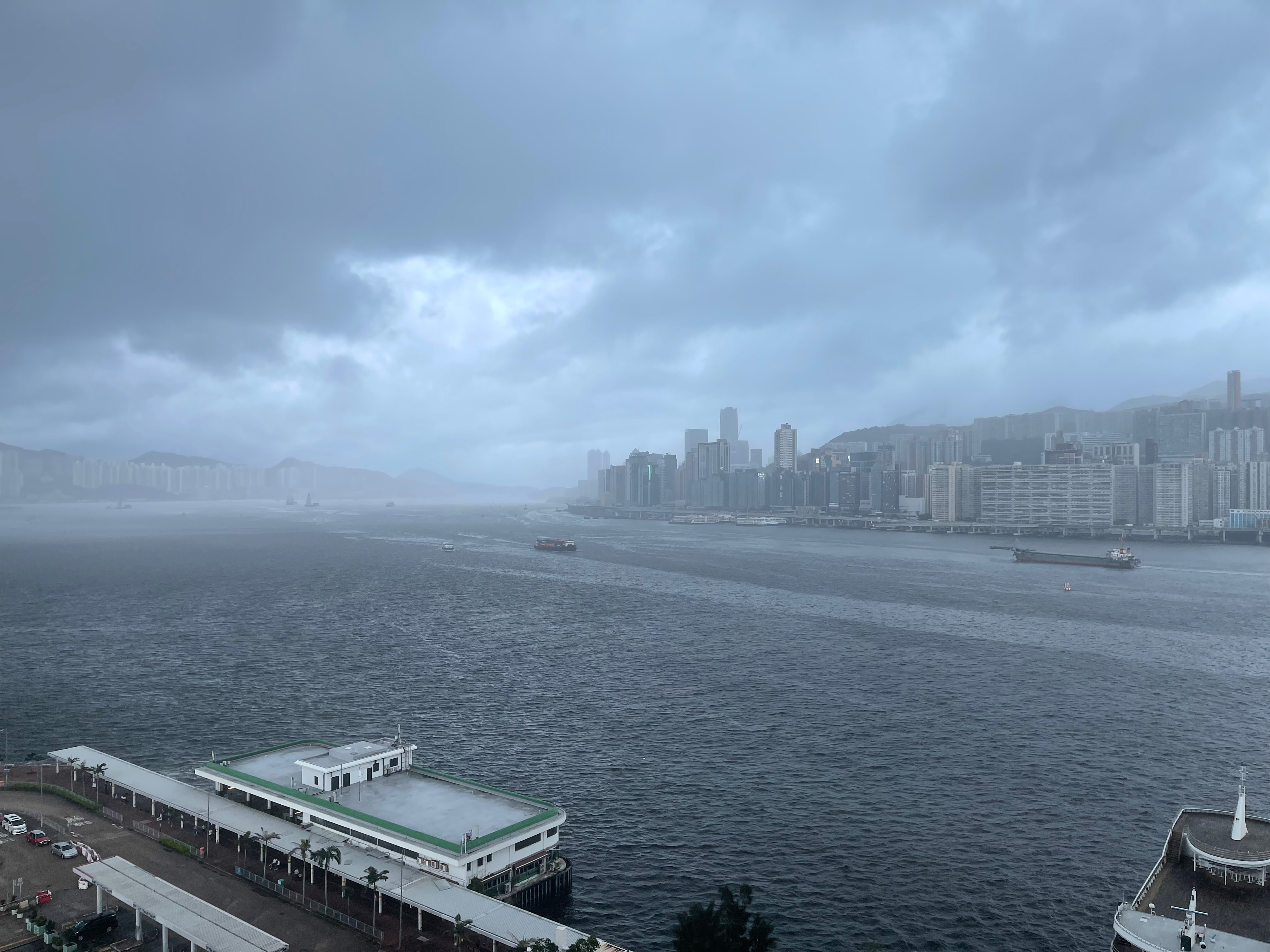
In the transient weather of June we drive west with a mission of some beauty. We are interviewing cities, searching out a new habitat before a new home. Houston, which had sheltered us these past months, will do no longer, the daily temperatures too frequently in the triple digits of the Fahrenheit scale.
Interviewing cities is a complex act, easily demonstrated by asking anyone about their favorite, or their home town. Out come adjectives in streams, beautiful, vibrant, alive, tiny, boring, progressive, hot, leisurely. Adjectives alone do not suffice, layered over with evaluations of the housing market and job prospects. “Cozy means tiny,” we are told, and “quaint means old and possibly broken.” “Oh I love this apartment, I’d stay if I could find work,” says a man moving to Alaska for its prospects. “Well the money is alright,” says another friend of his work, which is a remark as dense as a Craigslist apartment ad. Translated over a beer and into my ears, it means “I’d rather do something else.”
The picture, though, is less shady, as we have chosen June so as to see places at their best. Exactly as we moved to Houston in September, to feel the heat and welcome the gorgeous winter, so do we visit the west coast now, allowing the warnings of gloomy Februaries to bounce off of us in the sunshine. “This is the best weather yet this year,” we hear, in more than one location, and shrug. To inhabit a new place is to both accept unknown flaws as they emerge and continue to celebrate the reasons we had for arriving.
“You are lucky,” a friend says, “it’s not many people who get to chose a place they like to live.”
These words follow us for days on the long stretches of I-5 between Los Angeles and San Francisco, between there and Portland, and back. On I-80, heading again East to Colorado, we consider them. “I could live anywhere,” we both say, independently, and the truth is out. There are, we know, excellent reasons for inhabiting every place, as we have heard for Portland, San Francisco, Los Angeles, Sacramento and Seattle. Even Houston, which we have resolutely left, casts a certain charm from it’s position on the Gulf Coast. Perhaps, with our homeless stature, we grow easier to please, able to imagine ourselves any place with a bed, or without. Yet in each location our interview follows the same pattern, rigorous. We scout friends’ apartments, are escorted to bars, restaurants and grocery stores, and then are cut loose, to discover what we will in the longest days of the year. Walking, car parked and bicycle boxed, we bounce from back streets to river and ocean, from expensive districts to ones even more so. By interviewing cities we are trying to discover what sort of people they hold, and what beauty. At the end of most days, footsore and un-fed, we have found people worth watching and people worth meeting, and neighborhoods we’d like another month in, or five. Though we have limited our search to a few of the nation’s most liberal urban blocks, the feeling which overwhelms us as we drive is of the world’s scale, and the small choices that make up our lives.
“Moved here figuring on one year, maybe a couple. Been here fourteen, and well, yeah, just look at it,” says a friend of a friend. He speaks of San Francisco, though the echo I hear is of the world, and of living.
June 17th, 2009
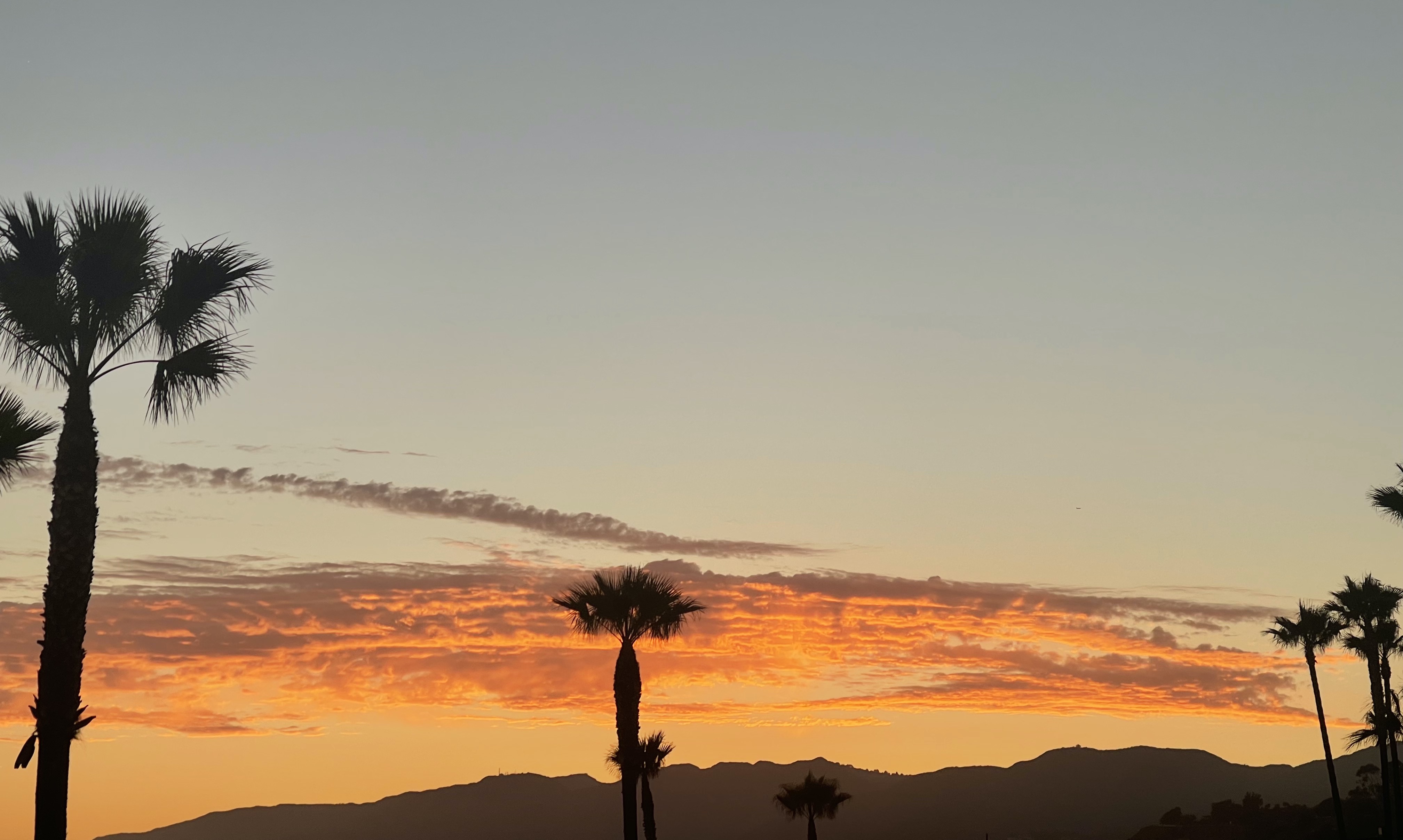
Bike packed I am back to pedestrian travel, moving at the speed of aimless amble rather than that of jogger mom or homeless cart pusher. I no longer whip past people caught between Land Rover and coffee shop. Instead, wearing torn jeans, battered sandals and ironic tee I am in their midst, lucky to have less rush propelling my morning and more patience for the dog walkers and the sky mumblers, whether they be bluetooth powered or other radiation fueled. It is good to be back in Venice, which has become a home base of homelessness for me as it has always been for others. Nine months ago I sat on these same carpets, steps and couches, my belongings in boxes from China to Houston.
Now, the Houston portion of my adventure complete, I am here again en route to somewhere I have never lived. Venice welcomes this, her streets lined with vans and Winnebagos that reek of extended occupation. Weather-wise these blocks off the beach are an ideal spot for homelessness, and I watch the wanderers, contemplating the gradual gentrification of Venice and the changes along Rose’s sidewalks these past five years. There are old men with the air of a previous time trapped in their scraggly beards, and a cereal bar, new and portentous, if not pre-. The grocery’s windows remain barred and the laundry mat oddly packed mid-morning, signs that while Rose welcomes new company old inhabitants remain.
At an intersection an older women on her bicycle admonishes me as she breaks traffic laws while wearing long gloves and a wide-brimmed hat. “That wasn’t right, horrible I know, shhh,” she says, and I smile. Telling someone was not in my plans, though it comes to be, and with coffee and bagels balanced and eyes on the surroundings instead of the vehicles I am already a traffic disaster.
Sitting at the cereal bar, several days later, I watch the old Greyhound parked across the street, trailer attached. It has the sleek lines of the future as seen from the eighties and the curtained windows driven by the last decade’s real estate boom, where prices quintupled as gang violence fell. The bus’ owner is invisible, though people pass our table in waves, and homeless or not is hard to say. Is this gradual shift, where Rose loses its gang members and gains dog walkers, as momentous after all? Fewer gun battles and more Chihuahuas, yet Venice still welcomes those of us with our belongings in our cars, as long as we have friends with more permanent residences. Breakfast finished, we rise, and, at a clothing store down the street shop but do not buy, the difference between these two levels of homelessness a matter of friendship and attire.
It will be some time still, I think, before Rose resembles Abbot Kinney, and the Shopping Carts for Homeless program, whose product litters the sidewalks, is ironic enough for me to love.
February 8th, 2009
The air is what changes with seasons. Hot and muggy in the summer, chill and dry in the winter, or hot and dry and cold and wet, the air is more than temperature, it is feel. Sometimes these seasonal shifts bring unwelcome days spent indoors sheltering. Sometimes they bring days with scant light, or with an abundance. At an ultimate tournament in Copenhagen two years ago the sun set near eleven, and players lingered outside long into the evening, marveling at the gift. In the winter the same climes are less inviting, and so, creatures of this mobile world, we depart for places less socked in with snow and ice.
It is February, the calendar tells me, though the February of my childhood memories bears no relation to these days of lively air, of sun and wind and a hint of rain, off in the distance. It is not dry, nor hot, neither chilly nor muggy. For these weeks Houston glows, and we take any excuse for long walks, evening strolls, and afternoons spent lazing with the windows open. Houston may be horrible in the summer as locals claim, muggy and hot with air still and sitting on the city. Shanghai is, five almost unbearable summers proved that, and all those with the ability flee to Thailand, Vietnam, Cambodia, the Philippines, Europe, North America.
An hour of flying has the carbon footprint of driving for a year, I hear. Car-less, then, I am still no more removed from our planet’s doom than anyone else. Let’s move to somewhere we can walk, I say, let’s move somewhere we don’t have to sit in traffic. Let’s fly somewhere, for vacation, I say. Let’s fly somewhere to see the world, and the hypocrisy, if true, is staggering. Reading Joan Didion’s The Year of Magical Thinking a year ago, I marveled at their use of air travel. Her story of loss, brilliant in it’s clarity, was for me as much a commentary on air travel, and our shifting abilities. She speaks of hopping up and down the California coast for dinner, on the PSA, an airline that no longer exists. Fascinated, I look them up, finding hijackings and crashes, joy and marketing all gradually subsumed into now-bankrupt nationwide carriers. Her stories, and their $13.50 aisle seats, belong to a different era, where airlines flew when they wanted to, or when they were full, like Chinese mini-busses do now, circling the train stations in search of passengers.
Playing ultimate yesterday with the wind blowing and sun shining, a woman told me of playing on similar days in Northern Europe. She mentioned living in Korea, and I told her of the tournament held yearly in Jeju, on practice fields built for the 2002 World Cup, and how the wind there blows off the ocean that lies just over the cliffs. All our travels are comparable through wind, and all were brought back to us standing amid yesterday’s gusts.
Coming home today, I stand outside and watch this day unfold. It is weather to bottle, says a friend, to save forever. We cannot, of course, the only store for days like this is in our memories, which is why we tell stories, and share travel histories. And I wonder, watching the clouds blow by in huge gusts that reach the ground so gently, whether this too is an era, and we, like Didion, will write stories of it that will astonish in thirty years, sending readers to Wikipedia and to pages kept by those who remember. Will two hundred dollar flights to an island south of Korea for a weekend of ultimate have the same allure of the PSA, of the common since become impossible? I consider the carbon footprint, my dislike for the automobile, and that claimed equivalent, and suspect they will.
Not quite yet, though. A friend is coming, from New York’s ice and snow, to see these magical February Houston days, hopping down for a weekend. He won’t be riding the smile, and it won’t cost him $13.50, but, if the weather holds and the flight is safe, the belief that our lives are special, and temporary, will be hard to shake.
January 7th, 2009
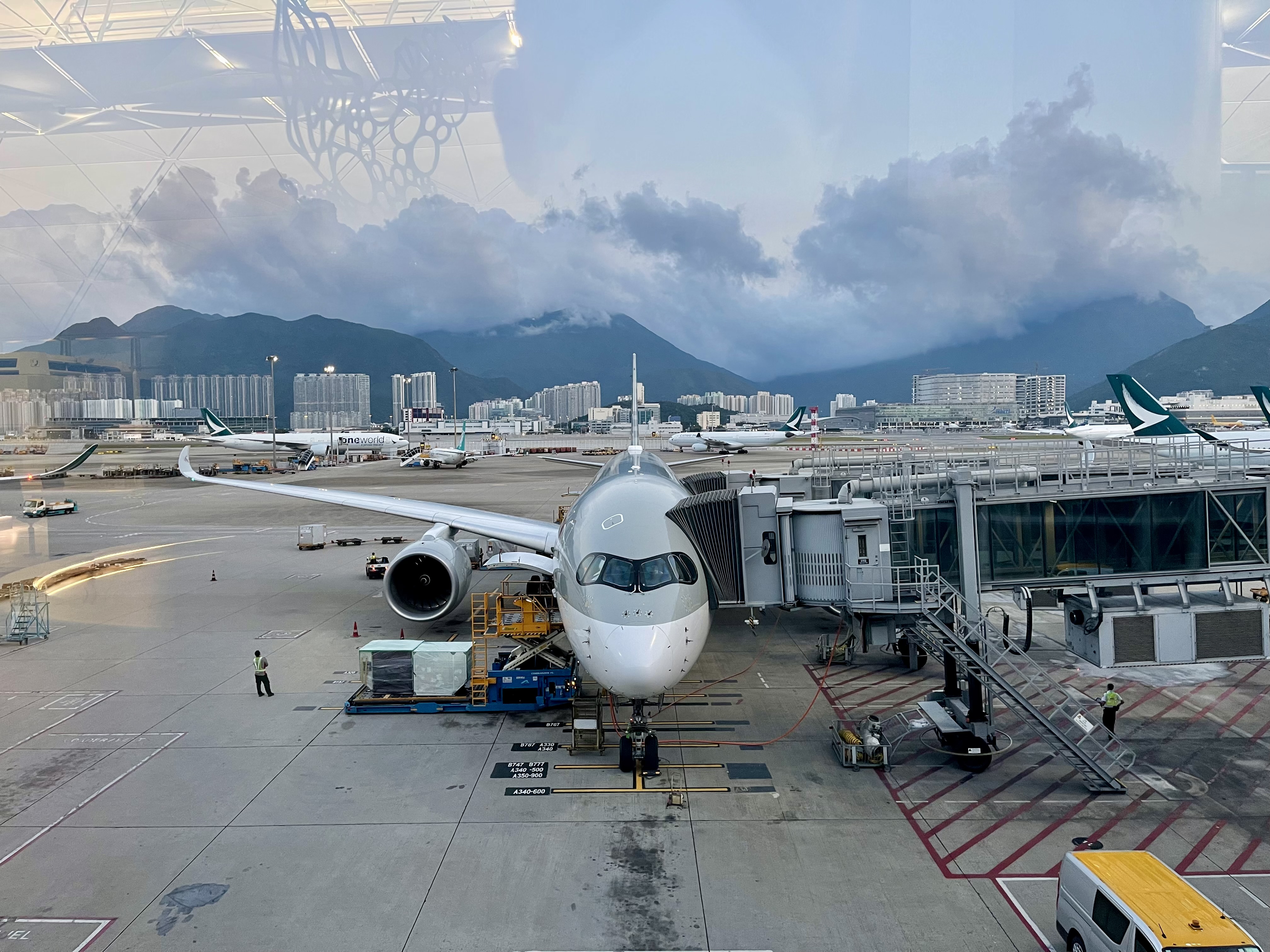
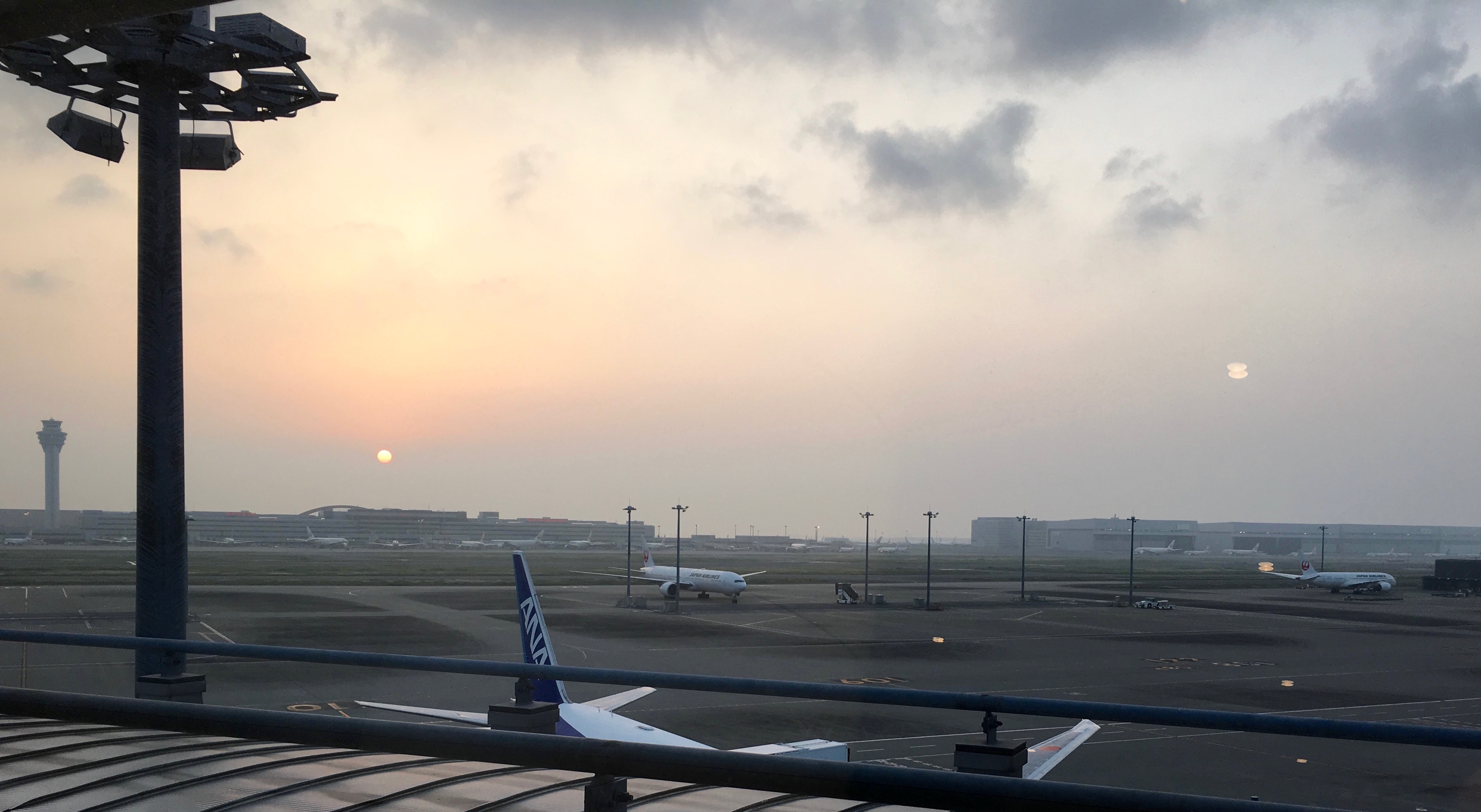
That these huge spaces are so frequently written about is unsurprising. We are a transient people consumed with life and information. Towering buildings granted meaning by our passage yet requiring the sacrifice of hours, airports have come to represent so much of the pause time in our lives. They are a space not personal, not pre-scheduled or already occupied. Thus emptied of purpose save the passing through they grant us a moment to analyze and write, to listen to our thoughts and watch others likewise held motionless by their very pursuit of such. With news televisions, internet, cell service, pay phones, sports bars and large windows they provide plenty of inputs. They do not leave us isolated, but unable to act.
Yes, we restlessly patrol our Blackberries for urgent problems to resolve. And there are those of us who simply space out, earbuds in and mind in neutral. Others pace, restless legs patrolling wide corridors while one hand holds the phone pressed against the jaw, checking again on the project we’ve been preparing to leave for weeks, in case one last moment of nervousness can guarantee success. We cram our legs up into our seats, leaving nothing touching the floor, no limb to anchor us to this city we are about to depart as we confide in family members we have just left, or will soon see. And we drink, relaxing in darkened caves away from the ever-present fluorescents and their helpfully automated voices reminding us that the automated walkway is coming to an end, that the alert level is orange, that our belongings are for handling by us alone.
The airport is an odd space for us, once through the security check, cut off from those who came to wish us farewell but still here, not yet separated by time zone or ocean. It is a space no one wishes for interactions in, save perhaps that brief farewell or hello, which we prefer at curbside, stepping into a vehicle that can escort us from the lonely halls. We hope for a speedy passage through, minimal time in baggage claim, in ticketing, going through security, yet we arrive with hours to spare, ensuring those moments of contemplation at the gate.
This gift of mental peace and clarity, these unclaimed, unscheduled half hours are the true miracle of airports, of this giant network we have built. So it is a good sign then to see how much writing they produce, how much thought, how many compassionate phone calls checking in on loved ones.
Now if there were such moments of unclaimed quiet in the progress of our daily lives, what would we contemplate, what would be produced in those hours removed from the world yet enmeshed in its workings?