November 21st, 2010
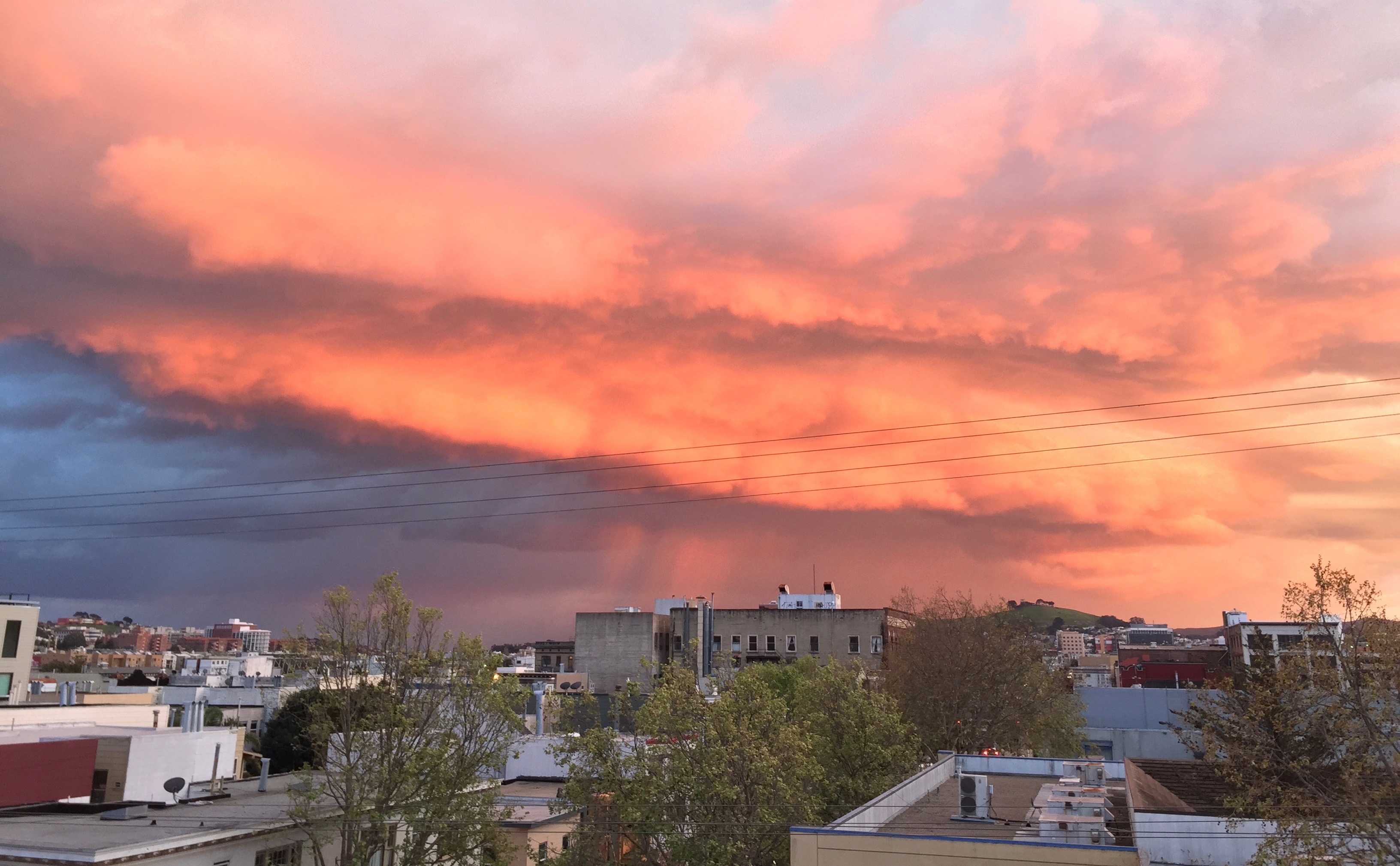
In Pescadero, along the coast of the Pacific an hour south of San Francisco, the water and the sky are one. The sun has set and the lightning, when it breaks, blankets everything. The ocean, in the last light, was white and whipped with the onrushing storm.
In a parking lot a group of a dozen debate shelter. Possible permutations of bodies to fill four bunks and one queen are offered and countered. Camping, formerly the refuge of the rugged or underfunded, has become undesirable.
As the hail hits there comes agreement. Newly gifted with the ability, we withdraw our need from the group. For the remainder of the stormy evening, the Fit that brought us here will be our home. It’s rear seats folded flat and padded with zipped-down sleeping bags, the little car has ample room for two people who routinely claim 5’10”. With a bit of contortion I manage to stretch my legs straight, a blessing with hip joints that ache from a day spent running in wet sand.
This ability, to travel short distances to strange places on our own schedule, is not newly gained. For years now the trusty Volvo has been our steed, taking us across the western states with pace. The Fit would not win by any measure of speed or acceleration, but this new found capacity, to shelter, impresses greatly.
In the two months it has been with us the Fit has seen the Pacific from a wide range of angles. Manzanita, Oregon last month and Pescadero, California today represent but the end points. It crosses the Golden Gate daily, winding first through the Presidio and then up into Marin. It has seen Mount Shasta and driven the streets of Portland, not to mention Berkeley and San Mateo. Some day soon it will see Los Angeles, I imagine.
First though will come more days like today, random parking lots and stands of weeds made into them, near grass fields or beaches, with cleats and discs and water bottles filling the back seats. The mobile is good for that, with it’s small frame and seats for five it handles odd spaces without question.
And, as we woke this morning, we realized it could do so much more, having sheltered us comfortably through downpours while moving and now while asleep. Wiping condensation from the windshield’s interior with a t-shirt though it occurred to us exactly why door visors are an option. Sleeping with ventilation that did not also let in the weather would be an improvement.
Perhaps the mobile will get a Christmas present.
October 17th, 2010
People have two kinds of geography. The first, outwardly invisible, is that of their history in the world. The house they grew up in, cities where they’ve worked. Geography like this can be shared but is hard to learn, residing as it does in memory, in emotions tied to shades of light and times of year. This is the hook that songs sink in to, and perfumes. In this version of my geography “We Walk the Same Line” will always be a Kawaguchi evening near Christmas, the park cold and empty save for the glow of white bulbs strung over dark grass and bare trees. I was alone, and can describe the evening, but can not take anyone there. A visit to the place I recall would find it different, would indeed create a separate version of that park and city, adding to a different set of maps. The geography of memory is, ultimately, intangible.
The second kind is a more physical topography. It can not be shared but is easy to learn, for it is built into each person, placed on them by the world. In the scar beneath my right eye lies a story of an ultimate tournament in Hong Kong, and in my crooked nose the story of a child’s repeated foolishness. These stories require extraction, in the form of questions, to understand, the physical, but require only sight, only touch to discover. Unlike the geography of where we’ve been, the geography of what has happened to us can become familiar to another, to anyone let close enough to touch.
We are all vaguely aware of each other’s recovered injuries, of the recurring impact of the years and places we have managed to survive. Likewise we know that most people, most people in most cities have a different birth place, a history of travel and a rationale for each. It is the learning of each that differs so, an interesting kind of separation. Who knows both, who cares to and who even could? How many sets of geography, of history, do we have space for in our heads, and on our bodies?
September 26th, 2010
For a long time most of my American experiences came in airports. Usually the international terminal at LAX, Tom Bradley, not widely considered among the world’s best. From this terminal, while JAL flights boarded for Tokyo and Indian families carried burdens large enough to share, I called grandparents, texted friends, and read magazine covers. These scant hours in America came on the tail end of business trips that had been filled with work and dinners, friends and traffic, but lacking in any sense of connection to the grander America. Perusing the kind of airport shops that in the tri-state area are called Hudson News, I read of television stars I did not know and movie releases I would later buy on Shanghai street corners for a dollar. I bought bubble gum and the Economist, and the people I reached on my soon-to-expire T-Mobile prepaid SIM seemed glad of the brief connections. Those conversations mostly centered on my impending leap, back out of the walls of the US, to a life difficult to recount while being constantly reminded to keep an eye on my luggage by pre-recorded voices.
In the past few years, again a resident of my home country, I have, I usually say, become more American, which is partially true. Some days the gulf has seemed huge, between what America looks like from a distance and what it can be in the day to day, both for better and worse. I have been back more than two years now and still the time away looms large in all recounting, in most introductions. People ask about China and Japan, though my life there, at seven years remove, is far further back than any moment of their own that enters the conversation. Without reason we do not discuss Houston, my home in ‘08 and ‘09. I wear my O’bama tee, sarcastically Irish, and try to recall that sense of possibility and elation, riding my BMX from West University to Midtown to call prospective voters in Missouri, in Virginia.
Until this week I have not felt truly at home here, in San Francisco, in America. I have wandered, watched, and written, I have driven much of this country and flown to far more, and I have made friends in Texas, in Colorado, in California and Oregon, but I have not been here, not fully.
The change is a series of anchors, tying me down, a series of possibilities, urging me on. I now have health care and an automobile, a purchase I forswore at twenty two. I have a loan, for the first time since university, and a commute, for the first time ever. After two years in my own country I have a job, which requires the above and promises to teach me things I do not know, to take me places I have not yet been.
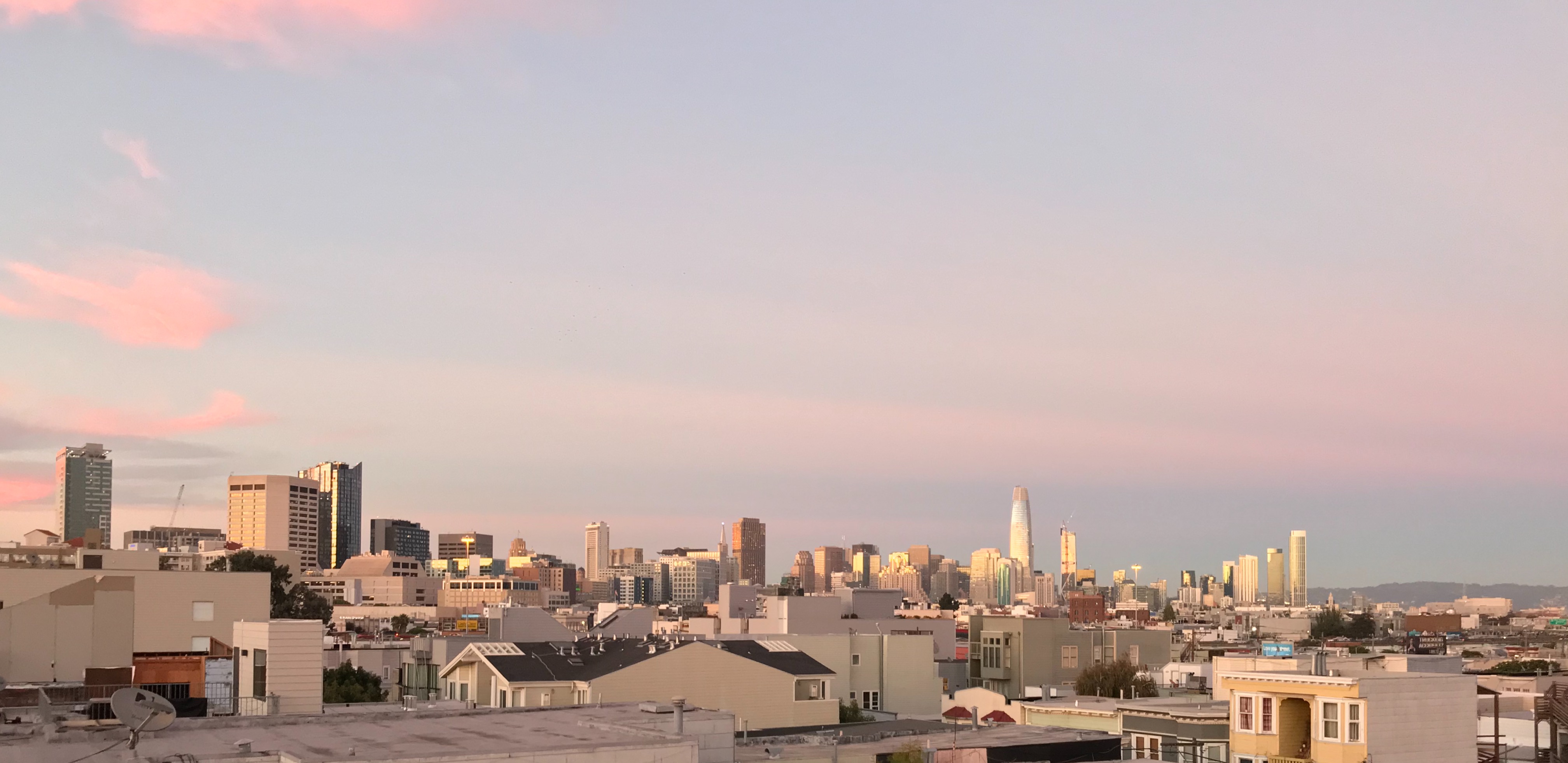
Shaving in the early morning light on Wednesday, the newness of it becoming habit, I smile at the reflection, this person who lives in San Francisco, who works in Petaluma.
After all these years I have finally come home to a place I had never lived.
August 10th, 2010
In the spring of twenty ten I take up running in the mornings.
At work for much of the last two years on a novel that is taking its time, the chunks of story assembling like the preface to a giant Tetris game on my computer, in my notebook, waiting for the busts of inspiration that will fit them together without seams, I am restless. Like Gibson, I “force myself to turn up every day, in case the writing also decides to.” Often it does not, and my body, unaware of our shared dedication to a craft that requires hours spent seated, grows antsy. So, in the mornings, through Golden Gate Park on the edge of the Pacific, I run.
Only one other time have I run regularly, independent of sport. The two years of my life in Tokyo that were without ultimate drove me to action, to waking up early on my days off and putting five kilometers under my feet before beginning anything else. Strangely those were productive days too, for the writing, and I wonder if Murakami is indeed on to something.
Living here, in the San Francisco of chilly mornings and fog-filled skies, I do not hesitate to challenge my body. The weather will not, an entirely predictable space of days that veer between fifty five and sixty eight without producing sunshine or true rain. At thirty I am slower than twenty two, a change that others have discovered before. Where once I would hurdle the obstacles that separated car traffic from pedestrians in quick repetition for several blocks as I wound my way around Yono Honmachi I now pant up the hills of the park, their dirt surfaces tricky on the ankles. The cold ambushes my lungs, and some days I walk a block or two on each end of the steeper sections, an acceptance of age I gave no thought to in Saitama. There are other things I do less frequently as well now, the climbing of water towers on apartment buildings, or light posts, or tiers of balconies. Yet slacklining has strengthened my ankles, and my throws are better, proof that not all things have been neglected. So too does the habit of jumping random object return, in opportune moments like New York afternoons or Shanghai evenings. But in San Francisco, in the early morning after lunches are made and carpools departed I put on shoes purchased in Los Angeles for this very purpose and wear my body down. Half an hour is sufficient, a fifteen block loop through foliage that sometimes contains cats and sometimes homeless people. Back in my house, face flushed at the sudden return of warmth, I celebrate with pull ups, jumping jacks, sit ups and a shower. It is not Murakami’s religious devotion to the road but it does seem to help.
With coffee fresh and mind full I then can sit at this window, looking out at the world, and compose, my mind awake and body stilled.
July 14th, 2010
The summer is here, I am told. Out the window the fog swirls in solid grey, and the red leaves on the scraggly tree blow in the wind as they did in November, and March. The days are long, but there is little blue in the sky. Based on the view this could be Shanghai, though this gray is made of water and that of coal dust. From the middle the result is the same, opaqued horizons and indistinguishable hours. Yet Shanghai, like Tokyo and New York, has a summer built on human sweat, a constant stick and resulting search for showers.
I hear distant friends wish for air conditioners, tired of their summer’s humidity and temperature. These faint desires barely penetrate my house, where the windows remain closed to keep out the chill wind. They are the desires are of some other place, unfathomable in San Francisco.
In conversation today a friend mentioned how hard it was for him to make time to travel, to leave his normal routine. I agreed, being scarcely able to imagine other locations, much less see them. We are two people prone to settling in, I said, to routines that are of us rather than of the place we inhabit. In Beijing we did much the same thing as Shanghai, or as Tokyo. We did much the same as last month in New York. The idea that there is a global common of airports, cities, parks and restaurants, bicycle rides and museums, long postulated, is indeed true. We are wrapped up in our location and have trouble stepping quickly out of it, or even remembering that such steps are possible.
But we move, he shot back, we move more than anyone we know, up and down and around and around this blue planet, to strange cities and strange cultures, with jobs and without, before our friends and after them, until we have almost no home, no single place with any deep attachment. How then can we be simultaneously sedentary, so unaware of the possibilities of weekend travel, when we are vagrant, groundless? He does not know.
From Vancouver I receive an emailed answer that penetrates the fog, which is also one.
“China seems so long ago,” writes a friend from my first years there, “like a dream, I wonder if that was me.”
Houston’s humidity, Tokyo’s hot concrete, even New York’s sweat-filled excursions of a scant month ago are hard to recall from the fog of July. I know them, from personal experience, but my body does not remember the heat, can not bring back the memories to my skin. We may move, all of us, in circles large or small, but where we are is what we see. My friend in New York, like myself, travels more than he admits, to Maine one weekend, to New Jersey the next. I do too, to Seattle, to Los Angeles. The problem is separate, and simple. From his air conditioned office and my socked in desk on a Tuesday these voyages are hard to remember, and our bodies are no help.
“I’m living in my head,” my friend confides, “like old times in China.”
We are half creatures of the world, exploring and learning as we can, and half reluctant cohabiters, uncertain of our joy in other’s company. The balance is a delicate thing, a scale fine enough to be tipped by weather.